
A supplier in Istanbul, a freelancer in Lagos, a customer in Toronto: sending money to all three usually means three different banks, three sets of fees and three waiting periods. Crypto payments offer a different route. Funds move over a shared network that never closes and doesn’t care which country the sender or receiver lives in. If your business sells or buys across borders, understanding how this works is worth an hour of your time.
Why Crypto Payments Suit Global Business
Crypto Payments Without Borders
Traditional international payments pass through correspondent banks, each adding its own checks, delays and charges. Crypto payments skip most of that chain. A transaction goes from one wallet to another across a public network, and the only requirement is an internet connection. For a company with customers or contractors in many countries, this means one payment method instead of a patchwork of local ones. It also opens doors in regions where card acceptance is limited or banking access is uneven.
Crypto Payments vs. Bank Transfers
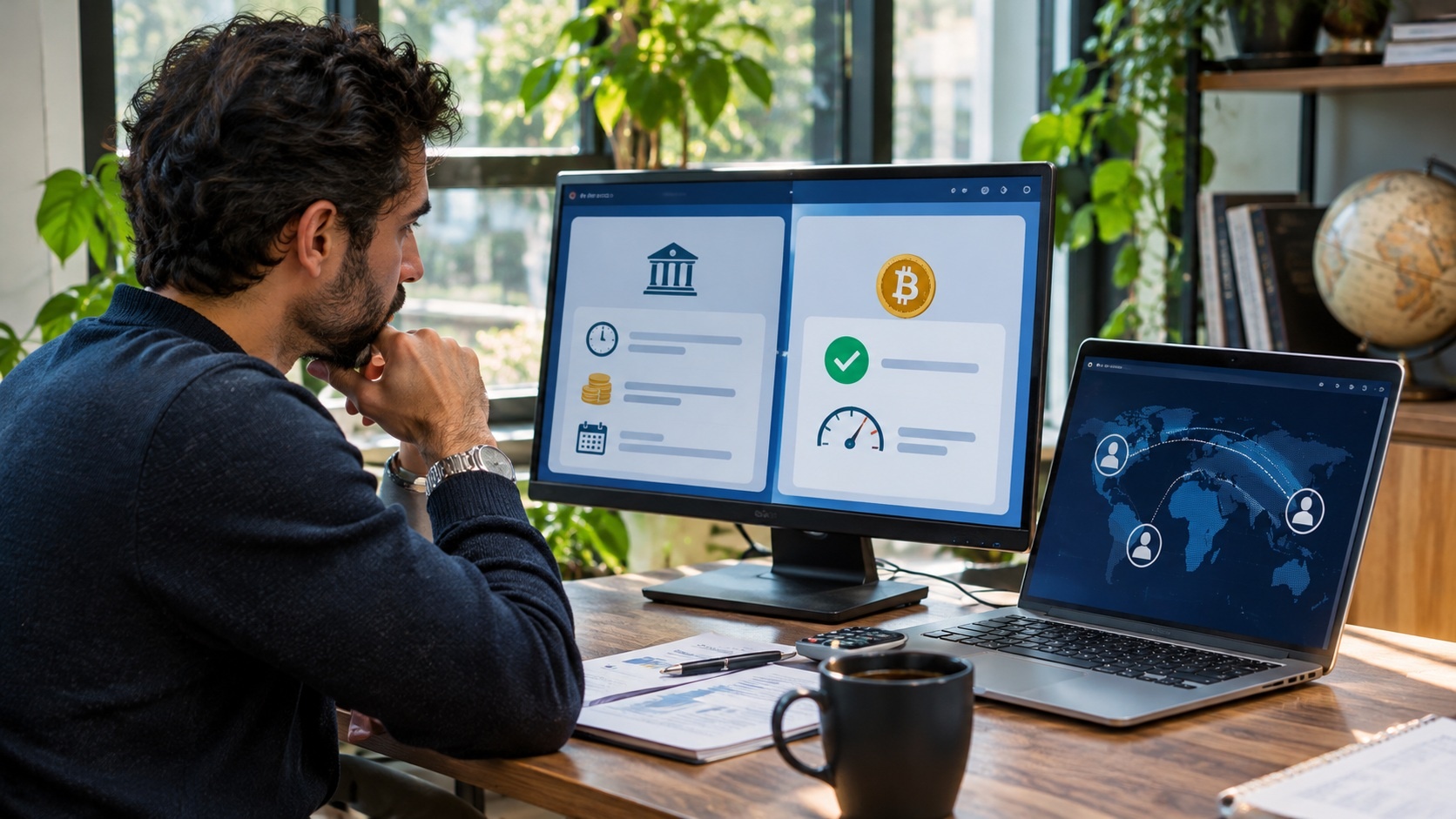
A bank wire can take several business days, and weekends or public holidays stretch that further. Crypto payments run around the clock, so a payment sent on Friday night can arrive before Saturday breakfast. Banks still win on familiarity and regulatory protection, and some businesses will keep using them for large, routine transfers. But when speed, reach and predictable costs matter, crypto payments are a serious alternative rather than a novelty.
Which Coins Work for Crypto Payments
Bitcoin and Ethereum Payments
Bitcoin is the most recognised digital asset, and many customers already hold it, which makes it a natural option to accept. Ethereum adds flexibility: it supports a huge ecosystem of tokens and generally confirms transactions faster than Bitcoin. Both are widely supported by wallets and exchanges, so your customers will rarely struggle to find a way to pay. The trade-off is price movement, which we will come to shortly.
USDT for Stable Crypto Payments
USDT is a stablecoin designed to track the US dollar, which makes it the practical favourite for invoices and payroll. A customer who pays 500 USDT today is paying roughly 500 dollars, not an amount that might swing by next week. It also runs on several networks, so you can choose a faster or cheaper one depending on the transfer. For most businesses starting out, stablecoins are the gentlest way into crypto payments.
Crypto Payments Costs and Settlement Time
Fees on Crypto Payments
Costs come from two places: the network fee paid to process the transaction, and any fee charged by your payment gateway or exchange. Network fees vary with congestion and the chain you use, so choosing the right network matters more than most beginners expect. Compared with international wire fees and card processing charges, crypto payments are often cheaper, especially on larger amounts, but it is wise to check the full cost before you commit rather than assume.
A trusted gateway like ULXPay helps keep crypto payments secure and private by protecting your transaction data and keeping your business details safe throughout the process.
How Fast Crypto Payments Settle
Settlement depends on the network. Some chains confirm within seconds, others need several minutes to be considered final. Either way, the wait is usually far shorter than a cross-border bank transfer. A gateway can also handle confirmations for you, showing a payment as complete once it is safely settled, so your team does not have to watch a blockchain explorer.

Crypto Payments Risks and Security
Price Volatility in Crypto Payments
Volatility is the most common worry, and it is a fair one. If you accept Bitcoin and its price drops before you convert it, you lose value. There are simple ways to manage this: price your goods in a stable currency, accept stablecoins, or convert incoming funds to your preferred currency straight away. Many businesses never hold volatile assets at all.
Keeping Crypto Payments Secure
Blockchain transactions cannot be reversed, so mistakes are costly. Double-check wallet addresses and the network before sending anything. Use two-factor authentication, restrict who in your team can approve payments, and keep long-term funds in secure storage rather than on a live account. Working with a reputable gateway adds a protective layer, including monitoring and clear transaction records for your accounting.
Faq
Can Crypto Payments Be Refunded?
Blockchain transactions cannot be reversed automatically. If a refund is needed, the receiving business sends a new payment back to the customer. This is why checking wallet addresses and networks before sending is so important.
How Do I Protect My Business When Using Crypto Payments?
Use two-factor authentication, limit who can approve transactions, and keep long-term funds in secure storage. To avoid price swings, accept stablecoins or convert incoming funds to your preferred currency straight away.
How Long Do Crypto Payments Take to Arrive?
Most arrive within seconds to a few minutes, depending on the network you use. That is typically much faster than an international bank transfer, and it works on weekends and holidays too.